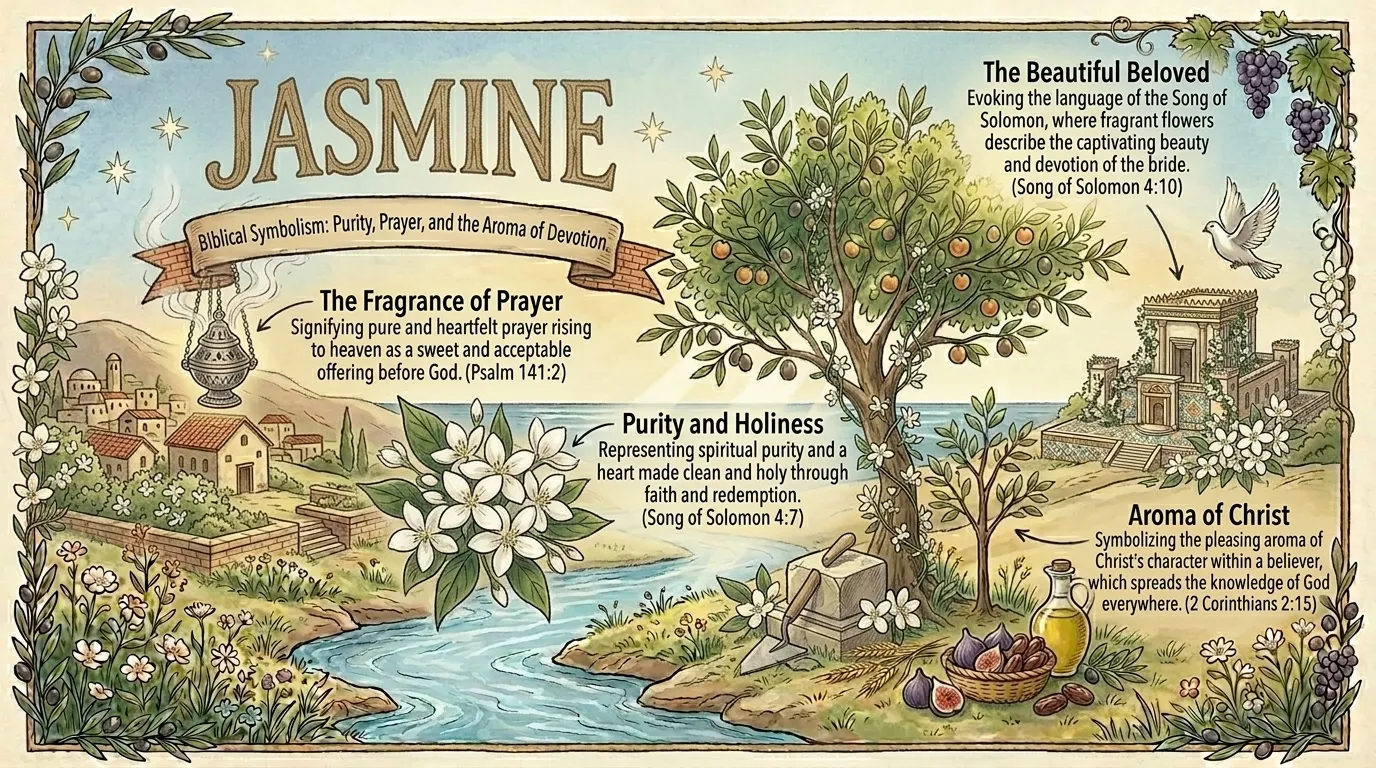
The Jasmine meaning in Bible carries a beautiful spiritual message connected to grace, purity, peace, and spiritual growth.
Although the name Jasmine does not directly appear in Scripture, many Christians associate it with the delicate jasmine flower, which symbolizes beauty, love, humility, and God’s creation.
In biblical symbolism, flowers often represent spiritual renewal, faithfulness, and the blessing of a pure heart. The name Jasmine is linked with qualities such as kindness, inner strength, compassion, and a gentle spirit that reflects Christian values.
Many believers also connect Jasmine with emotional healing, hope, and divine guidance during difficult seasons of life. Its soft and elegant meaning makes it one of the most loved modern names with spiritual significance.
Understanding the Jasmine meaning in Bible can inspire deeper faith, encourage personal growth, and reveal how even a beautiful name can carry powerful spiritual symbolism and purpose.
What Does Jasmine Mean in the Bible?
Jasmine is not directly mentioned as a personal name in the Bible, but it carries symbolic meanings connected to beauty, purity, grace, and spiritual flourishing. The name comes from Persian origins meaning “gift from God” or “fragrant flower,” and its spiritual symbolism aligns closely with biblical themes of inner beauty, renewal, peace, and emotional healing.
Origin and Meaning of the Name Jasmine
The name Jasmine comes from the Persian word:
“Yasmin”
which refers to the jasmine flower, a fragrant and delicate bloom known worldwide for its beauty and calming scent.
Over time, the name spread across many cultures and languages, eventually becoming popular in English-speaking countries.
Common meanings associated with Jasmine include:
- fragrant flower
- gift from God
- beauty
- grace
- purity
- gentleness
Although the name itself is not Hebrew or Greek in origin, its symbolism closely reflects many spiritual concepts found throughout Scripture.
Does the Name Jasmine Appear in the Bible?
The exact name Jasmine does not appear in most Bible translations.
However, flowers, fragrances, gardens, and flourishing plants are deeply important biblical symbols. Throughout Scripture, flowers often represent:
- spiritual beauty
- God’s creation
- growth
- renewal
- temporary earthly life
- inner character
Because Jasmine is strongly associated with fragrance and beauty, many people connect it spiritually with biblical passages about flourishing, grace, and spiritual fruitfulness.
Biblical Connections to Flowers and Fragrance
The Bible frequently uses flowers and fragrance as symbols of spiritual beauty and God’s presence.
Song of Solomon 2:1–2
“I am a rose of Sharon, a lily of the valleys.”
This verse symbolizes beauty, love, and spiritual affection.
2 Corinthians 2:15
“For we are to God the pleasing aroma of Christ.”
Fragrance in Scripture often symbolizes a life that reflects goodness, love, and spiritual sincerity.
Matthew 6:28–29
“See how the flowers of the field grow…”
Jesus used flowers to teach about trust, peace, and God’s care.
These themes closely align with the spiritual symbolism often connected to Jasmine.
Spiritual Meaning of Jasmine in the Bible
Jasmine Symbolizes Inner Beauty
Modern culture often focuses heavily on outward appearance, status, and social validation. But biblical spirituality places far greater importance on inner character.
The symbolism of Jasmine reflects quiet beauty that comes from within.
This includes qualities like:
- kindness
- compassion
- gentleness
- humility
- emotional warmth
- sincerity
1 Peter 3:4
“You should be known for the beauty that comes from within.”
Spiritually, Jasmine reminds people that true beauty is not temporary or external. It grows from the heart.
Jasmine Represents Peace and Emotional Healing
The jasmine flower is widely known for its calming fragrance. Spiritually, this connects beautifully with biblical themes of peace and emotional restoration.
Many people today live with:
- anxiety
- stress
- emotional burnout
- fear of failure
- mental exhaustion
The symbolism of Jasmine encourages emotional stillness and trust.
John 14:27
“Peace I leave with you; my peace I give you.”
This type of peace is deeper than temporary comfort. It reflects inner stability even during difficult seasons.
Spiritually, Jasmine can symbolize:
- emotional healing
- calmness
- reassurance
- gentle strength
- quiet faith
Jasmine Reflects Spiritual Growth and Flourishing
Flowers naturally symbolize growth and development.
The spiritual meaning of Jasmine reminds people that growth often happens slowly and quietly.
Not every transformation is dramatic.
Sometimes healing looks like:
- becoming emotionally healthier
- setting boundaries
- learning patience
- rebuilding confidence
- growing spiritually over time
Psalm 92:12
“The righteous will flourish like a palm tree.”
The biblical idea of flourishing reflects a life rooted in wisdom, faith, and emotional maturity.
Jasmine symbolizes this type of healthy spiritual growth.
Jasmine Represents Grace and Gentleness
One of the most powerful spiritual meanings connected to Jasmine is gentle strength.
Many people mistake gentleness for weakness, but the Bible teaches the opposite.
Gentleness requires emotional control, wisdom, patience, and compassion.
Galatians 5:22–23
“The fruit of the Spirit is love, joy, peace… gentleness and self-control.”
The fragrance and softness of Jasmine reflect these spiritual qualities beautifully.
Spiritually, Jasmine can remind people to:
- respond with kindness
- remain emotionally balanced
- practice compassion
- choose wisdom over anger
Jasmine Symbolizes Hope and Renewal
Flowers bloom after seasons of darkness and harsh weather. This natural process mirrors emotional and spiritual renewal.
Many people searching for the meaning of Jasmine are also searching for hope after painful experiences.
The symbolism of Jasmine reflects:
- new beginnings
- healing after heartbreak
- emotional restoration
- renewed faith
- personal transformation
Isaiah 43:19
“See, I am doing a new thing!”
Spiritually, Jasmine represents the possibility of growth even after difficult seasons.
Jasmine Meaning in Modern Life
The symbolism of Jasmine feels especially meaningful in modern society because so many people struggle internally while appearing fine externally.
Today’s world often creates pressure through:
- social media comparison
- unrealistic expectations
- emotional isolation
- identity confusion
- fear of rejection
The spiritual meaning of Jasmine offers a softer and healthier perspective.
It reminds people that:
- growth takes time
- gentleness is powerful
- inner peace matters
- healing is possible
- identity is deeper than appearance
Jasmine and Anxiety: A Spiritual Perspective
Anxiety often causes people to live in constant mental tension.
The symbolism of Jasmine encourages slowing down emotionally and spiritually.
Its gentle imagery reflects peace rather than pressure.
Instead of constantly striving for perfection, Jasmine symbolizes:
- rest
- trust
- emotional balance
- quiet confidence
Many people find comfort in symbols connected to flowers because they represent natural growth without forced control.
Jasmine and Identity Confusion
Many people today quietly struggle with questions like:
- Who am I really?
- Why do I feel disconnected?
- What is my purpose?
- Why do I seek constant validation?
The spiritual symbolism of Jasmine reminds people that identity grows naturally through experience, healing, and spiritual maturity.
Just as flowers bloom gradually, personal growth also unfolds over time.
Jasmine and Relationships
The meaning of Jasmine also connects deeply to relationships.
Healthy relationships should bring:
- peace
- encouragement
- emotional safety
- honesty
- growth
Toxic relationships often create emotional confusion and insecurity.
The symbolism of Jasmine reminds people to value relationships rooted in gentleness, respect, and emotional care.
Dreams About Jasmine: Spiritual and Psychological Meaning
Some people dream about jasmine flowers or repeatedly encounter the name Jasmine during emotional or spiritual transitions.
Spiritually, Jasmine in dreams may symbolize:
- healing
- emotional peace
- spiritual renewal
- hope
- inner beauty
- personal growth
However, it is important to stay balanced.
Not every dream is automatically a supernatural message.
Sometimes dreams reflect subconscious emotions and unresolved thoughts.
Psychological Interpretation of Jasmine Dreams
Psychology teaches that the subconscious mind communicates through symbols.
Flowers often represent:
- emotional needs
- healing
- love
- vulnerability
- transformation
If Jasmine appears repeatedly in dreams, it may reflect:
- a desire for peace
- emotional healing
- longing for gentler relationships
- personal renewal
- emotional self-discovery
This does not make the experience meaningless. It shows how deeply symbols can affect human emotion and identity.
Repeated Signs and Synchronicity: Is Jasmine a Spiritual Sign?
Some people repeatedly notice Jasmine through:
- conversations
- dreams
- music
- books
- social media
- unexpected moments
This can feel spiritually important.
A balanced perspective is essential.
Sometimes repeated signs happen because the brain naturally notices emotionally meaningful patterns. Psychologists call this the Frequency Illusion or Baader-Meinhof Effect.
Still, repeated symbols can become personally meaningful if they inspire:
- reflection
- healing
- growth
- emotional awareness
- positive life changes
Scientific Insights Behind Name Symbolism
Identity Formation
Psychologists understand that names and symbols influence self-perception.
People often emotionally connect with meanings that reflect qualities they desire or value.
Emotional Symbolism
The human brain naturally associates flowers with emotions such as:
- peace
- beauty
- gentleness
- renewal
- hope
This explains why names like Jasmine often feel emotionally comforting.
The Subconscious Mind
The subconscious mind constantly processes emotions, memories, desires, and fears.
Symbols connected to flowers or fragrance may appear during periods of emotional transition or personal growth.
Practical Life Lessons From the Meaning of Jasmine
Practice Emotional Reflection
Spend time asking yourself:
- What brings me peace?
- What drains my emotional energy?
- What kind of person am I becoming?
Reflection creates emotional clarity.
Develop Gratitude
Gratitude shifts attention away from fear and negativity.
Simple daily practice:
- write down 3 things you appreciate each day
This strengthens emotional resilience over time.
Strengthen Spiritual Habits
The symbolism of Jasmine encourages inner peace and spiritual grounding.
Helpful habits include:
- prayer
- meditation
- journaling
- quiet reflection
- reading Scripture
Build Emotional Awareness
Healthy emotional awareness includes:
- understanding your feelings
- expressing emotions honestly
- recognizing emotional triggers
- responding calmly instead of impulsively
Choose Gentle and Healthy Relationships
Protect your peace by surrounding yourself with people who encourage:
- honesty
- emotional safety
- kindness
- growth
- respect
Healthy relationships help people flourish emotionally and spiritually.
Powerful Bible Verses Connected to the Meaning of Jasmine
Proverbs 27:9
“Perfume and incense bring joy to the heart.”
This verse reflects the comforting symbolism of fragrance and emotional warmth.
Philippians 4:7
“The peace of God… will guard your hearts and minds.”
Jasmine symbolizes calmness and emotional peace.
Hosea 14:5–6
“He will blossom like a lily.”
This verse reflects spiritual flourishing and renewal.
Colossians 3:12
“Clothe yourselves with compassion, kindness, humility, gentleness, and patience.”
These qualities beautifully connect to the symbolism of Jasmine.
Modern Example: What Jasmine Can Symbolize Today
Imagine someone recovering from emotional burnout and years of self-doubt.
They slowly begin:
- healing emotionally
- creating healthier boundaries
- rediscovering self-worth
- reconnecting spiritually
- learning inner peace
That process reflects the spiritual symbolism of Jasmine.
Not loud transformation.
But quiet, beautiful growth.
Jasmine Meaning in Bible: Key Takeaways
- Jasmine does not directly appear as a biblical name.
- The name comes from Persian origins meaning “fragrant flower.”
- Spiritually, Jasmine symbolizes:
- peace
- grace
- beauty
- healing
- gentleness
- spiritual growth
- Biblical flower symbolism strongly connects to the meaning of Jasmine.
- Jasmine reflects inner beauty more than outward appearance.
- The name can symbolize emotional healing and personal transformation.
FAQs:
Is Jasmine a biblical name?
Jasmine is not directly mentioned in the Bible, but its symbolism strongly connects to biblical themes of beauty, peace, and spiritual growth.
What does Jasmine spiritually mean?
Spiritually, Jasmine symbolizes inner beauty, emotional healing, gentleness, grace, and renewal.
What does the jasmine flower symbolize in Christianity?
In Christian symbolism, flowers often represent purity, spiritual flourishing, hope, and God’s creative beauty.
Is Jasmine connected to peace?
Yes. The calming fragrance of jasmine is often associated with peace, emotional balance, and healing.
What does dreaming about Jasmine mean?
Dreaming about Jasmine may symbolize emotional healing, personal growth, peace, or subconscious desires for renewal and comfort.
Final Thoughts:
Real beauty begins within.
In a world obsessed with appearance, performance, and constant comparison, the symbolism of Jasmine reminds people that gentleness, peace, and emotional healing are deeply valuable strengths.
Like a flower slowly blooming, personal growth often happens quietly.
Healing takes time.
Confidence grows gradually.
Peace develops intentionally.
And even after painful seasons, the soul can flourish again.
Whether you connect with Jasmine spiritually, emotionally, or symbolically, its meaning carries a hopeful reminder:
You do not need to become someone else to have value.
Growth is already happening within you.
And sometimes the strongest people are the ones who continue blooming with grace after difficult seasons.
Read More..