The Tree of Life Bible meaning is one of the most profound and enduring symbols in all of Scripture.
Rooted in the Garden of Eden and stretching all the way to the Book of Revelation, this sacred tree carries deep spiritual significance that speaks to God’s original design for humanity and His promise of restoration.
From its first appearance in Genesis to its final triumph in eternity, the Tree of Life represents access to God, divine sustenance, and the gift of immortality. Understanding the Tree of Life Bible meaning helps us grasp why God guarded it after the fall and why it stands at the center of the New Jerusalem.
Whether you’re studying Scripture for the first time or deepening your faith journey, exploring this powerful symbol unlocks timeless truths about eternal life, redemption, and God’s unbreakable covenant with His people.
What Is the Tree of Life in the Bible?
Quick Answer
It first appears in the Garden of Eden and later reappears in the Book of Revelation, showing that God’s ultimate plan is to restore humanity’s relationship with Him.
Rather than representing magical power, the Tree of Life symbolizes the life that comes from living in fellowship with God.
Yes.
It first appears in:
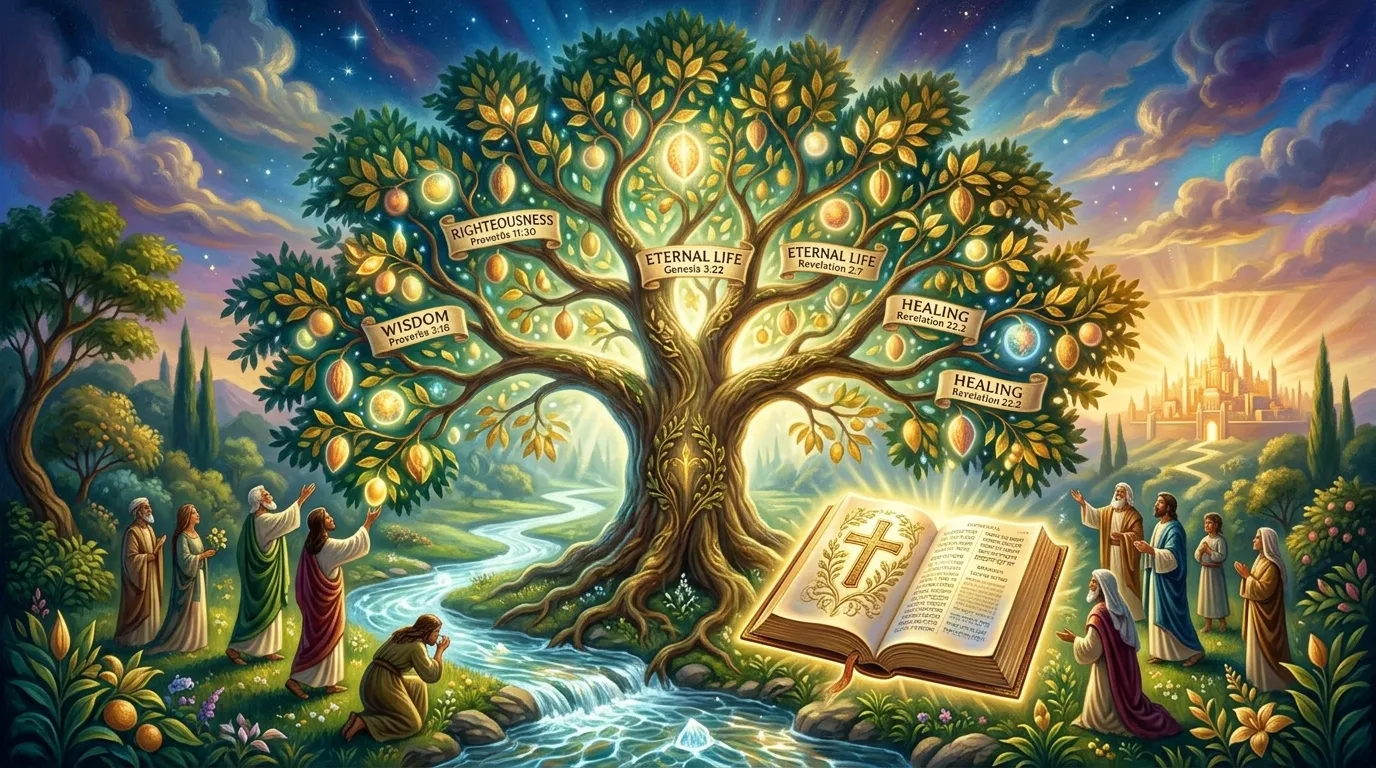
- Genesis 2:9, where God places it in the middle of the Garden of Eden.
- Genesis 3:22–24, after Adam and Eve’s disobedience.
- Proverbs, where it becomes a symbol of wisdom, righteousness, fulfilled hope, and gentle speech.
- Revelation 22:1–2, where the Tree of Life grows beside the river flowing from God’s throne and its leaves bring healing to the nations.
These passages reveal that the Tree of Life is not merely a historical object but a powerful biblical image connecting creation, redemption, and eternity.
The Hebrew Meaning and Biblical Origin of the Tree of Life
The Hebrew Name: Etz Chayim
The phrase consists of two important words:
- Etz (עֵץ) — Tree
- Chayim (חַיִּים) — Life
This reflects a broader biblical understanding of life—one that includes spiritual vitality, peace, purpose, and an enduring relationship with God.
The Tree of Life in the Garden of Eden
God planted it in the center of Eden alongside the Tree of the Knowledge of Good and Evil.
Genesis 3:24 explains that cherubim and a flaming sword guarded the way to the tree, preventing humanity from living forever in a fallen condition.
Eternal life separated from God’s holiness would have left humanity trapped in brokenness forever.
From Genesis to Revelation: One Complete Story
One of the most beautiful aspects of the Bible is that the Tree of Life appears at both the beginning and the end of Scripture.
This literary connection reveals a central biblical message:
The Tree of Life therefore becomes a symbol of hope, reminding believers that God’s story ends not with separation, but with restoration and eternal fellowship.
Spiritual Meaning of the Tree of Life in the Bible
The Tree of Life as a Symbol of Eternal Life
The most widely recognized meaning of the Tree of Life is eternal life.
Unlike temporary earthly life, biblical eternal life refers to an everlasting relationship with God.
Revelation 2:7
“To the one who is victorious, I will give the right to eat from the tree of life, which is in the paradise of God.”
The Tree of Life as a Symbol of God’s Presence
The Tree of Life stands as a picture of this reality.
Just as a healthy tree depends on a constant source of nourishment, believers grow spiritually by remaining connected to God.
Psalm 16:11
“You make known to me the path of life; You will fill me with joy in Your presence.”
The Tree of Life as a Symbol of Divine Wisdom
The Book of Proverbs uses the Tree of Life as a metaphor for wisdom and righteous living.
Rather than describing a physical tree, these passages reveal how God’s wisdom produces a life of blessing.
Spiritual Reflection
Biblical wisdom is more than knowledge. It is the ability to live according to God’s truth with humility, discernment, and love.
The Tree of Life as a Symbol of Healing and Restoration
One of the most hopeful images in Scripture appears in Revelation 22.
This powerful picture reminds believers that God’s final kingdom will be free from suffering, pain, injustice, and death.
Revelation 22:2
“The leaves of the tree are for the healing of the nations.”
Spiritual Reflection
Even during seasons of pain and uncertainty, the Tree of Life reminds us that healing and restoration remain central to God’s ultimate plan.
The Tree of Life as a Symbol of Hope
Hope runs through the entire biblical story.
Although sin separated humanity from Eden, God never abandoned His people.
From Genesis to Revelation, every step of Scripture points toward restoration.
Romans 15:13
“May the God of hope fill you with all joy and peace as you trust in Him.”
Spiritual Reflection
The Tree of Life encourages believers to look beyond present struggles and trust that God is still working toward His perfect purposes.
Bible Verses About the Tree of Life and Their Meaning
The Tree of Life appears throughout the Bible at key moments in God’s story of creation, redemption, and eternal restoration. Each passage reveals another layer of its spiritual significance.
Rather than viewing these verses as isolated references, it’s helpful to see them as one connected narrative that points to God’s desire for humanity to experience life in His presence.
Genesis 2:9 The Tree of Life in the Garden of Eden
“The Lord God made all kinds of trees grow out of the ground—trees that were pleasing to the eye and good for food. In the middle of the garden were the tree of life and the tree of the knowledge of good and evil.”
This is the Bible’s first mention of the Tree of Life.
Placed at the center of Eden, it symbolizes the perfect relationship between God and humanity before sin entered the world.
Spiritual Insight
The Tree of Life reminds us that God’s original design for humanity was one of peace, abundance, purpose, and eternal fellowship.
Genesis 3:22–24 Humanity Loses Access
Cherubim and a flaming sword guarded the entrance to prevent humanity from living forever in a fallen condition.
While this may seem like judgment, it also demonstrates God’s mercy.
Spiritual Insight
God’s plan was never to leave humanity separated forever.
The closed path in Genesis prepares readers for the restored path revealed in Revelation through God’s redemption.
Proverbs 3:18 Wisdom Is a Tree of Life
Here, the Tree of Life becomes a picture of divine wisdom.
Living according to God’s wisdom produces lasting peace, stability, and blessing.
Spiritual Insight
Wisdom is not simply knowing what is right.
Biblical wisdom means living in a way that reflects God’s character every day.
Proverbs 11:30 Righteous Living
“The fruit of the righteous is a tree of life.”
This verse teaches that faithful living positively influences others.
A life rooted in God becomes a source of encouragement, hope, and spiritual growth.
Spiritual Insight
Your actions, kindness, and integrity can become life-giving to the people around you.
Proverbs 13:12 Hope Restored
“Hope deferred makes the heart sick, but a longing fulfilled is a tree of life.”
Everyone experiences disappointment.
This verse reminds believers that fulfilled hope brings healing and renewed joy.
Spiritual Insight
God often works through seasons of waiting before fulfilling His promises.
Proverbs 15:4 Healing Through Words
“The soothing tongue is a tree of life.”
Words have incredible power.
Gentle, truthful, and encouraging speech brings healing instead of division.
Spiritual Insight
One kind conversation can completely change someone’s day—or even their life.
Revelation 2:7 Eternal Reward
Jesus promises faithful believers access to the Tree of Life.
This points toward eternal fellowship with God.
Spiritual Insight
The loss experienced in Eden is ultimately overcome through God’s plan of salvation.
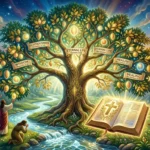
Revelation 22:1–2 — The Tree of Life Restored
The Bible closes with one of its most beautiful images.
The Tree of Life stands beside the river flowing from God’s throne.
Its fruit never fails.
Its leaves bring healing to the nations.
Spiritual Insight
The final chapters of Scripture remind us that God’s story ends with restoration rather than separation.
Tree of Life Bible Meaning in Modern Life
Although the Tree of Life first appeared thousands of years ago, its message remains surprisingly relevant today.
Many of the struggles people face today stress, loneliness, uncertainty, broken relationships, and the search for identity reflect the same human longing for connection, purpose, and hope that Scripture addresses.
Finding Hope During Anxiety
Modern life often feels overwhelming.
Deadlines, financial pressures, health concerns, and uncertainty about the future can easily create anxiety.
The Tree of Life reminds believers that lasting peace comes from remaining rooted in God rather than circumstances.
Discovering Identity in God
Many people struggle with questions like:
- Who am I?
- Why am I here?
- Does my life matter?
The biblical message of the Tree of Life answers these questions by pointing us back to our Creator.
When people build their identity on temporary things, disappointment often follows.
Strengthening Relationships
Healthy relationships require qualities that Scripture consistently encourages:
- Patience
- Kindness
- Forgiveness
- Humility
- Faithfulness
The Tree of Life symbolizes growth that benefits others.
Just as a healthy tree provides fruit and shade, spiritually healthy people become a source of encouragement within their families, friendships, workplaces, and communities.
Personal Growth and Spiritual Maturity
Real growth rarely happens overnight.
Trees grow slowly through every season.
The same is true for spiritual maturity.
Some seasons involve visible progress.
Others involve waiting, pruning, and learning.
Dreams, Repeated Signs, and the Tree of Life
Many people dream about trees or repeatedly notice Tree of Life artwork, jewelry, or symbols.
Naturally, they begin asking whether these experiences have spiritual meaning.
The Bible encourages believers to seek wisdom and discernment while avoiding superstition.
Spiritual Interpretation
From a biblical perspective, dreaming about the Tree of Life may encourage reflection on themes such as:
- Spiritual renewal
- Hope
- Healing
- Wisdom
- Eternal perspective
- Drawing closer to God
Rather than predicting the future, such dreams can prompt meaningful self-examination and renewed faith.
Repeated Signs and Synchronicity
Sometimes people notice Tree of Life symbols appearing repeatedly in books, conversations, artwork, or unexpected places.
These experiences often feel deeply personal.
For some believers, they become reminders to pause, pray, and refocus on God’s promises.
However, it’s important to maintain a balanced perspective.
The Bible does not teach that every repeated symbol is a direct message from God.
A Balanced Biblical Perspective
God certainly speaks through His Word, His Spirit, and sometimes through circumstances.
Yet Scripture remains the primary authority for understanding God’s will.
The Tree of Life points beyond itself.
Its ultimate purpose is to direct our attention toward God, not merely toward symbols.
Scientific Insights: Why Symbols Like the Tree of Life Feel So Meaningful
The Tree of Life has inspired people across cultures for centuries.
Psychology and neuroscience help explain why symbols like this often resonate so deeply.
These scientific insights do not replace biblical truth; instead, they help us understand how the human mind responds to meaningful images.
The Subconscious Mind and Symbolism
The subconscious mind naturally stores memories, emotions, and life experiences through symbols.
Trees often represent:
- Growth
- Stability
- Family
- Shelter
- Renewal
- Life
Pattern Recognition
When someone is thinking deeply about faith, healing, or purpose, they may become more aware of Tree of Life imagery appearing around them.
Psychologists sometimes describe this as selective attention or the frequency illusion.
This doesn’t automatically mean the symbol carries a supernatural message.
Instead, it highlights how our minds naturally focus on ideas that matter to us.
Identity Formation
Modern psychology teaches that people build their identities around meaningful stories, beliefs, and values.
The biblical story of the Tree of Life provides a powerful narrative of creation, loss, redemption, and hope.
Many believers find comfort in seeing their own spiritual journey reflected within this larger story.
It reminds them that their lives are part of God’s ongoing work of restoration.
Emotional Symbolism
Symbols often communicate emotions more deeply than facts alone.
The Tree of Life evokes feelings of:
- Peace
- Security
- Hope
- Healing
- Belonging
- Renewal
These emotional connections explain why the symbol continues to inspire artists, churches, writers, and believers around the world.
Most importantly, Scripture invites us not merely to admire the symbol itself but to embrace the God who gives it meaning.
Practical Life Lessons from the Tree of Life
The Tree of Life is far more than a beautiful biblical symbol it offers timeless lessons that can shape the way we live, think, and grow every day.
Here are some practical ways to apply its biblical meaning in your daily life.
Stay Rooted in God’s Word
Make time each day to:
- Read the Bible
- Reflect on Scripture
- Pray with sincerity
- Ask God for wisdom
Even a few minutes of daily reflection can strengthen your faith over time.
Practice Gratitude Every Day
Gratitude changes our perspective.
Instead of focusing only on what is missing, gratitude helps us recognize God’s blessings—even during difficult seasons.
A simple habit of writing down three things you’re thankful for each day can improve both your spiritual outlook and emotional well-being.
Grow Through Every Season
Trees experience every season of the year.
Some seasons bring visible growth.
Others involve waiting, pruning, and preparation.
Life works much the same way.
If you’re walking through a difficult season, remember that God often uses challenges to strengthen character, deepen faith, and prepare us for future blessings.
Growth is not always visible, but it is often happening beneath the surface.
Speak Words That Bring Life
The Book of Proverbs describes gentle speech as a “tree of life.”
Our words have the power to encourage or discourage, heal or hurt.
Choose to speak words that:
- Build others up
- Offer hope
- Show kindness
- Reflect patience
- Express forgiveness
One thoughtful conversation can have a lasting impact on someone’s life.
Stay Connected to Healthy Relationships
Healthy trees often grow within thriving ecosystems.
Likewise, people flourish in supportive relationships.
Spend time with individuals who encourage your faith, inspire personal growth, and help you become a better person.
Positive relationships provide strength during life’s challenges.
Trust God’s Timing
One of the greatest lessons of the Tree of Life is patience.
God rarely works according to our timetable.
His plans unfold with perfect wisdom.
When answers seem delayed, remember that waiting does not mean God has forgotten you.
Sometimes the greatest growth happens during the seasons we understand the least.
Common Misunderstandings About the Tree of Life
Because the Tree of Life has become popular in books, artwork, jewelry, and various spiritual traditions, misconceptions sometimes arise.
Understanding what the Bible actually teaches helps us maintain a balanced perspective.
The Tree of Life Is Not a Magical Object
The Bible never presents the Tree of Life as a magical charm or source of mystical power.
Its importance comes from what it represents:
- God’s presence
- Eternal life
- Wisdom
- Healing
- Restoration
The focus should always remain on God rather than the symbol itself.
Not Every Symbol Is a Personal Message
Some people believe every appearance of a tree, dream, or symbol is a direct sign from God.
While God can certainly use experiences to encourage people, Scripture teaches believers to exercise wisdom and discernment.
The Bible remains the primary guide for understanding God’s will.
Symbols can inspire reflection, but they should never replace biblical truth.
The Tree of Life Points to Christ
From a Christian perspective, the Tree of Life ultimately points toward God’s plan of salvation fulfilled through Jesus Christ.
The story begins with access to life in Eden.
It ends with restored access in the New Creation.
This beautiful connection highlights God’s unchanging desire to restore humanity to Himself.
FAQs:
What is the Tree of Life in the Bible?
The Tree of Life is a sacred biblical symbol representing eternal life, God’s presence, wisdom, healing, and restoration. It appears in Genesis, Proverbs, and Revelation as part of God’s plan for humanity.
What does the Tree of Life symbolize spiritually?
Spiritually, the Tree of Life symbolizes a life rooted in God. It represents hope, spiritual growth, divine wisdom, healing, and a lasting relationship with God.
Why was access to the Tree of Life blocked in Genesis?
This act reflected both God’s justice and His mercy while preparing the way for ultimate redemption through His plan of salvation.
Why does the Tree of Life appear again in Revelation?
The Tree of Life reappears in Revelation to show that God’s redemptive plan is complete. Through His eternal kingdom, believers are once again invited into perfect fellowship with Him, fulfilling the hope first introduced in the Garden of Eden.
What does dreaming about the Tree of Life mean?
From a biblical perspective, dreams about the Tree of Life may encourage reflection on spiritual growth, healing, hope, or a closer relationship with God.
Final Thoughts:
The Tree of Life Bible meaning is one of Scripture’s most beautiful and hope-filled themes. From the opening chapters of Genesis to the closing vision of Revelation, it reminds us that God’s purpose has always been to bring life, healing, and restoration to His people.
The Tree of Life tells a story that every person can relate to a story of creation, brokenness, redemption, and hope. It reminds us that although humanity experienced separation from God through sin, His love never failed.
In today’s fast-paced world, where many struggle with anxiety, identity, loneliness, and uncertainty, the message of the Tree of Life remains remarkably relevant. It encourages us to stay rooted in faith rather than fear, to pursue wisdom over temporary success, and to trust that God is still at work even when we cannot see the full picture.
At the same time, it’s important to maintain a balanced perspective. Not every tree, dream, or repeated symbol is necessarily a direct message from God. The Tree of Life serves as a powerful biblical symbol that points beyond itself to the God who alone gives true life.
Wherever you find yourself today whether you’re seeking answers, healing, direction, or renewed hope the Tree of Life offers a timeless reminder that God’s story does not end with loss. It ends with restoration. His invitation remains open to all who seek Him with sincere hearts.
Like a healthy tree planted beside living water, a life rooted in God’s presence continues to grow through every season. And as Scripture beautifully reveals, the greatest promise of the Tree of Life is not simply living forever it is living forever with the One who created, loves, and restores us completely.