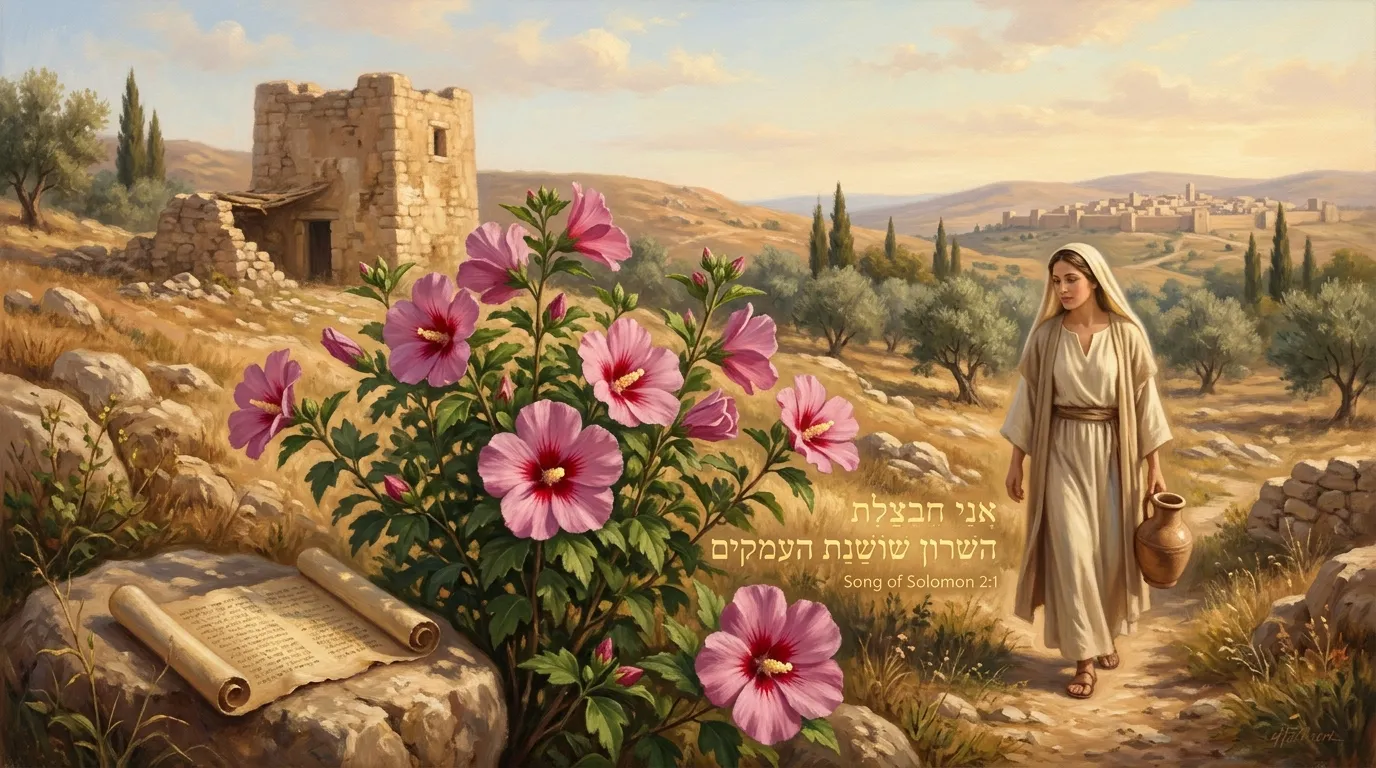
The Rose of Sharon Bible meaning has captivated theologians, scholars, and believers for centuries. Rooted in the poetic verses of Song of Solomon 2:1, this timeless floral symbol carries profound spiritual significance that continues to inspire Christians worldwide. But what does the Rose of Sharon truly represent in Scripture?
At its core, the Rose of Sharon Bible meaning points to beauty, love, and divine redemption. Many scholars interpret it as a messianic symbol a breathtaking portrait of Jesus Christ Himself, blooming with grace, compassion, and sacrificial love.
Others see it as representing the soul’s deep longing for God, a metaphor for spiritual intimacy between humanity and the divine.
From ancient Hebrew poetry to modern-day worship songs, this sacred flower has blossomed into one of Christianity’s most beloved symbols.
In this guide, we uncover its true biblical roots, theological depth, and the transformative hope it offers every believer.
What Is the Rose of Sharon in the Bible?
Quick Answer
The Rose of Sharon is mentioned in Song of Solomon 2:1, where the speaker declares:
“I am the rose of Sharon, and the lily of the valleys.” (Song of Solomon 2:1)
In its original biblical context, this verse is part of a poetic love song celebrating beauty, love, and admiration. While the passage does not directly identify Jesus as the Rose of Sharon, many Christians have long viewed it as a symbolic picture of Christ because it reflects qualities such as beauty, purity, love, grace, and hope.
The Rose of Sharon therefore carries both an original biblical meaning and a symbolic Christian interpretation, making it one of the most meaningful images in Scripture.
Does the Rose of Sharon Refer to Jesus?
The Biblical Answer
One of the most common questions people ask is whether Jesus is actually called the Rose of Sharon.
The answer requires careful reading of Scripture.
The Bible never directly states that Jesus is the Rose of Sharon. In the Song of Solomon, the phrase is spoken within poetic dialogue between lovers. Most biblical scholars understand it as describing the beauty and humility of the speaker rather than serving as a direct title for Christ.
However, throughout church history, many Christian writers, pastors, and hymn writers have used the Rose of Sharon as a symbolic description of Jesus because His life reflects many of the same qualities associated with the flower.
These include:
- Perfect love
- Compassion
- Humility
- Beauty of character
- Hope
- New life
- Spiritual renewal
Rather than contradicting Scripture, this symbolic understanding serves as a devotional application that points believers toward the character of Christ.
Why This Symbol Became So Popular
The Bible frequently uses flowers, vineyards, gardens, and trees as illustrations of spiritual truths.
Jesus Himself often taught using nature because it helped people understand God’s Kingdom in simple yet powerful ways.
The Rose of Sharon eventually became a cherished Christian symbol because it beautifully represents the love and grace that believers experience through Christ.
The Hebrew Meaning and Origin of the Rose of Sharon
What Does “Sharon” Mean?
The word Sharon comes from the Hebrew word שָׁרוֹן (Sharon).
Rather than referring to a person’s name, Sharon describes a fertile coastal plain in ancient Israel located between Mount Carmel and the Mediterranean Sea.
The region was famous for:
- Rich farmland
- Green pastures
- Colorful wildflowers
- Fertile soil
- Natural beauty
Because of these characteristics, Sharon became a biblical symbol of abundance, blessing, peace, and restoration.
Several Old Testament passages describe the Plain of Sharon as a place where God’s goodness is displayed through the beauty of creation.
What Was the Rose of Sharon?
Interestingly, biblical scholars do not agree on the exact flower mentioned in the Song of Solomon.
Possible identifications include:
- A wild crocus
- A lily
- A tulip-like flower
- A meadow flower native to ancient Israel
The Hebrew word translated as “rose” may not refer to the modern rose flower at all.
This uncertainty reminds us that the Bible’s primary focus is not botanical classification but spiritual symbolism. The flower’s beauty, simplicity, and ability to flourish naturally communicate truths that remain meaningful regardless of its exact species.
The Biblical Context of the Rose of Sharon
Understanding the Song of Solomon
To understand the Rose of Sharon correctly, we must first understand the book in which it appears.
Song of Solomon, also called the Song of Songs, is one of the Bible’s wisdom books. It is a collection of poetic love songs celebrating love, commitment, beauty, and the covenant relationship between a bride and her beloved.
On one level, the book celebrates human love within marriage.
On a deeper spiritual level, many Christians see it as reflecting God’s love for His people and Christ’s relationship with His Church.
This dual perspective explains why the Rose of Sharon has become such a powerful Christian symbol throughout history.
Why Flowers Matter in the Bible
Flowers appear throughout Scripture as reminders of both life’s beauty and its temporary nature.
Isaiah writes that flowers fade, but God’s Word remains forever (Isaiah 40:8).
Jesus pointed to the lilies of the field as evidence of God’s faithful care (Matthew 6:28–30).
In the Song of Solomon, flowers symbolize beauty, joy, love, renewal, and flourishing life.
The Rose of Sharon fits naturally into this biblical pattern, representing a life that reflects God’s goodness and grace.
Spiritual Meaning of the Rose of Sharon
A Symbol of Christ’s Unchanging Love
One of the deepest spiritual meanings connected with the Rose of Sharon is God’s enduring love.
Human love can sometimes fail because people make mistakes, disappoint one another, or experience changing circumstances.
God’s love, however, remains constant.
The beauty of the Rose of Sharon reminds believers that Christ’s love is not based on human performance but on His faithful character.
John 15:9
“As the Father has loved me, so have I loved you. Now remain in my love.”
Jesus invites His followers to live confidently in His love, knowing that His care never changes.
Spiritual Reflection
If you’re walking through disappointment, loneliness, or uncertainty, the Rose of Sharon serves as a gentle reminder that God’s love continues to surround you even when your circumstances feel overwhelming.
A Symbol of Humility and True Beauty
The Rose of Sharon was likely a simple wildflower growing naturally across the fertile plains of Sharon.
It was not cultivated in royal gardens or admired because of wealth or status.
Its beauty came from exactly what God created it to be.
This reflects one of the greatest lessons found throughout Scripture: true beauty begins with humility.
James 4:10
“Humble yourselves before the Lord, and He will lift you up.”
God consistently chooses humble people to accomplish extraordinary purposes.
Moses described himself as humble.
David was a shepherd before becoming king.
Mary described herself as the Lord’s servant before becoming the mother of Jesus.
Even Christ Himself demonstrated perfect humility by serving others.
Spiritual Reflection
In a world that often measures success by appearance, popularity, or achievement, the Rose of Sharon reminds us that God values a humble heart above outward recognition.
A life rooted in humility often produces the greatest spiritual beauty.
A Symbol of Hope and New Beginnings
Flowers naturally remind us that winter never lasts forever.
After seasons of darkness come seasons of growth.
This biblical image makes the Rose of Sharon a powerful symbol of hope.
Throughout Scripture, God repeatedly transforms barren places into places of life and blessing.
Isaiah 35:1–2
“The wilderness and the dry land shall be glad; the desert shall rejoice and blossom like the crocus.”
Isaiah uses blossoming flowers as a picture of God’s restoring power.
Even when circumstances seem impossible, God is able to bring renewal where people expect only emptiness.
Spiritual Reflection
Perhaps you’re experiencing a season of waiting, grief, uncertainty, or disappointment.
The Rose of Sharon reminds believers that God’s timing often produces unexpected beauty. Just as flowers bloom in their appointed season, God continues working behind the scenes, preparing new beginnings that may not yet be visible.
Spiritual Meaning of the Rose of Sharon (Continued)
A Symbol of God’s Presence and Comfort
Throughout the Bible, flowers often remind us that God is near, even when life feels uncertain. The Rose of Sharon reflects His gentle care, constant presence, and desire to walk with His people through every season of life.
When we face disappointment, grief, or loneliness, it is easy to wonder whether God has forgotten us. Yet Scripture repeatedly assures believers that He remains close to the brokenhearted and never abandons those who trust Him.
Psalm 34:18
“The Lord is close to the brokenhearted and saves those who are crushed in spirit.”
This verse reminds us that God’s presence is often experienced most deeply during difficult seasons rather than easy ones.
Spiritual Reflection
Like a flower blooming quietly in an open field, God’s comfort often appears in simple ways—a timely prayer, encouraging words from a friend, or unexpected peace during uncertainty. The Rose of Sharon encourages believers to recognize these quiet reminders of God’s faithful presence.
A Symbol of Spiritual Growth and Fruitfulness
A healthy flower does not bloom overnight. It grows gradually through sunlight, water, healthy soil, and patient care.
The Christian life follows a similar pattern.
Spiritual maturity develops through daily prayer, reading God’s Word, worship, obedience, and trusting Him through both joyful and challenging seasons.
Colossians 2:6–7
“Continue to live your lives in Him, rooted and built up in Him, strengthened in the faith as you were taught.”
Paul compares spiritual growth to a plant with deep roots. Strong roots produce lasting fruit, even during storms.
Spiritual Reflection
Many people become discouraged when they don’t see immediate spiritual progress. The Rose of Sharon reminds us that healthy growth is usually slow, steady, and often invisible before it becomes visible. God is shaping our character long before others notice the results.
Bible Verses Connected to the Rose of Sharon
Song of Solomon 2:1
“I am the rose of Sharon, and the lily of the valleys.”
This famous verse celebrates beauty, love, and humility. While it appears within poetic dialogue, many Christians also see it as a beautiful reminder of Christ’s love for His people.
Matthew 6:28–29
“Consider the lilies of the field, how they grow; they neither toil nor spin.”
Jesus used flowers to teach an important lesson about trusting God’s provision. If God lovingly cares for flowers that bloom only for a season, how much more will He care for those who belong to Him?
Isaiah 35:1–2
“The wilderness and the dry land shall be glad; the desert shall rejoice and blossom.”
Isaiah paints a picture of hope and restoration. The blossoming landscape symbolizes God’s power to transform dry places into places of life and joy.
Isaiah 40:8
“The grass withers and the flowers fall, but the word of our God endures forever.”
Flowers remind us that earthly beauty is temporary, but God’s promises remain eternal. This verse encourages believers to build their lives on God’s unchanging truth rather than temporary circumstances.
Rose of Sharon Bible Meaning in Modern Life
Finding Peace During Anxiety
Modern life often feels overwhelming. Financial pressure, health concerns, family responsibilities, and constant digital distractions can leave people feeling exhausted.
The Rose of Sharon reminds believers that genuine peace is found not in perfect circumstances but in trusting God’s faithful care.
Instead of allowing fear to control your thoughts, Scripture encourages bringing every concern to God through prayer.
Discovering Your True Identity
Many people search for identity through careers, social media, achievements, or the approval of others.
The Bible points us toward a different foundation.
Our true worth comes from being created in God’s image and deeply loved by Him.
Just as the Rose of Sharon reflects quiet beauty without striving for attention, believers are called to find confidence in God’s love rather than public recognition.
Building Stronger Relationships
The Song of Solomon celebrates love that is faithful, respectful, and committed.
These principles remain valuable today.
Healthy relationships flourish when they are built on:
- Trust
- Kindness
- Forgiveness
- Patience
- Honest communication
- Mutual respect
The Rose of Sharon reminds us that love becomes most beautiful when it reflects God’s character.
Growing Through Difficult Seasons
Every flower experiences changing seasons.
There are times of planting, growth, blooming, and rest.
Life follows a similar pattern.
Some seasons are filled with joy and opportunity, while others involve waiting, healing, or uncertainty.
The message of the Rose of Sharon encourages believers not to lose hope during difficult seasons because God continues working even when His plans are not immediately visible.
Sometimes the greatest spiritual growth happens beneath the surface before it can be seen by others.
Dreams, Repeated Signs, and the Rose of Sharon
What Does It Mean to Dream About the Rose of Sharon?
Many people dream about flowers during seasons of change, healing, or spiritual reflection. If the Rose of Sharon appears in a dream, it may naturally leave you wondering whether it carries a special message.
From a biblical perspective, the Bible teaches that God has spoken through dreams at certain times, such as with Joseph, Daniel, and others. However, Scripture does not teach that every dream is a direct message from God.
Instead, dreams should be approached with wisdom, prayer, and discernment.
If you dream about the Rose of Sharon, it may encourage you to reflect on themes such as:
- God’s love and faithfulness
- Spiritual renewal
- Hope after difficult seasons
- Inner peace
- Personal growth
Rather than focusing only on the dream itself, consider how it points you back to God’s Word and His promises.
What If You Keep Seeing the Rose of Sharon?
Some people repeatedly notice the phrase “Rose of Sharon” in sermons, Bible studies, songs, books, or conversations.
This can naturally feel meaningful.
While repeated experiences may encourage spiritual reflection, it is important to maintain a balanced biblical perspective.
Seeing the Rose of Sharon repeatedly does not automatically mean God is sending a supernatural sign. Sometimes repeated attention occurs because your heart is already focused on a particular spiritual question or season of life.
Instead of searching for hidden messages, allow these moments to remind you to:
- Spend time in prayer.
- Read Scripture regularly.
- Reflect on God’s love and faithfulness.
- Trust His guidance one day at a time.
Biblical wisdom is always the safest foundation for interpreting life’s experiences.
Psychological and Scientific Insights
Why Certain Symbols Stay in Our Minds
Psychologists explain that the human brain naturally gives meaning to symbols that connect with our emotions and personal experiences.
When we encounter a beautiful biblical image like the Rose of Sharon, our minds may associate it with hope, comfort, love, or healing.
This process helps explain why certain verses, symbols, or phrases remain memorable throughout life.
The Power of the Subconscious Mind
The subconscious mind constantly processes experiences, emotions, and beliefs even when we are not fully aware of it.
If you have recently been praying, reading Scripture, or seeking encouragement, your mind may naturally focus on biblical symbols such as flowers, gardens, or the Rose of Sharon.
Rather than viewing this as something mysterious, it can simply be an invitation to continue growing spiritually.
Emotional Symbolism and Personal Growth
Flowers have represented hope, renewal, beauty, and life across many cultures for centuries.
Within the Bible, these images point believers toward God’s care and creative power.
The Rose of Sharon reminds us that emotional healing and spiritual growth often happen gradually, just as flowers bloom in their proper season.
Practical Life Lessons from the Rose of Sharon
Practice Daily Gratitude
Take a few moments each day to thank God for His blessings, both big and small.
Gratitude helps shift our attention from fear to faith and reminds us of God’s ongoing goodness.
Spend Time in Prayer
Prayer strengthens our relationship with God and helps us find peace during uncertainty.
Like a flower that depends on sunlight, our spiritual lives flourish when we stay connected to our Creator.
Read and Reflect on Scripture
The Bible provides wisdom, encouragement, and guidance for every stage of life.
Reading God’s Word regularly helps deepen faith and strengthen spiritual understanding.
Develop Emotional Awareness
Pay attention to your thoughts and emotions instead of ignoring them.
Bringing your concerns honestly before God creates space for healing, wisdom, and growth.
Choose Humility Every Day
The Rose of Sharon symbolizes quiet beauty rather than outward status.
Look for opportunities to serve others with kindness, patience, forgiveness, and compassion.
Small acts of humility often leave the greatest impact.
A Balanced Biblical Perspective
The Rose of Sharon is a beautiful biblical symbol, but it should never be separated from the overall message of Scripture.
Some people assign mystical meanings to every flower, dream, or repeated experience. The Bible encourages a different approach.
Our confidence should always rest in God’s revealed Word rather than personal speculation.
The Rose of Sharon invites us to appreciate God’s beauty, love, and faithfulness—not to search for hidden messages beyond what Scripture teaches.
By keeping Christ at the center of our interpretation, we can enjoy the richness of biblical symbolism while remaining grounded in truth.
FAQs:
What is the Rose of Sharon in the Bible?
The Rose of Sharon appears in Song of Solomon 2:1 as part of poetic language describing beauty and love. Many Christians also view it as a symbolic picture of Christ’s love, humility, and grace.
Is Jesus called the Rose of Sharon?
The Bible does not directly call Jesus the Rose of Sharon. However, many Christian teachers have traditionally used the title as a symbolic description because it reflects His beauty, compassion, love, and hope.
What does the Rose of Sharon symbolize spiritually?
Spiritually, the Rose of Sharon represents God’s love, humility, hope, restoration, spiritual growth, and faithful presence throughout life’s changing seasons.
What does it mean to dream about the Rose of Sharon?
Dreams about the Rose of Sharon may encourage reflection on hope, healing, or spiritual renewal. However, not every dream should be viewed as a direct message from God. Scripture and prayer remain the best guides for discernment.
Why is the Rose of Sharon important to Christians?
The Rose of Sharon reminds many believers of Christ’s beauty, His unconditional love, and God’s ability to bring hope and renewal even during life’s most difficult seasons.
Final Thoughts:
The Rose of Sharon Bible meaning is far more than the name of a beautiful flower. It is a timeless biblical image that points toward love, humility, hope, restoration, and the faithful character of God.
Whether you first encountered the Rose of Sharon while reading Song of Solomon, hearing a sermon, or searching for its spiritual meaning, its message continues to inspire believers around the world. It reminds us that God often reveals profound truths through the beauty of His creation and that His love remains constant through every season of life.
If you are walking through uncertainty, grief, or questions about your purpose, let the Rose of Sharon encourage your heart. Like a flower that blooms in its appointed season, your life is also unfolding according to God’s perfect wisdom and timing.
Continue seeking Him through prayer, reading His Word, and trusting His promises. Although every journey includes challenges, God’s love never fades, His grace never fails, and His plans are always working toward a greater purpose.
The beauty of the Rose of Sharon ultimately reminds us of this enduring truth: when our lives remain rooted in God’s love, hope continues to blossom even in the most unexpected places.