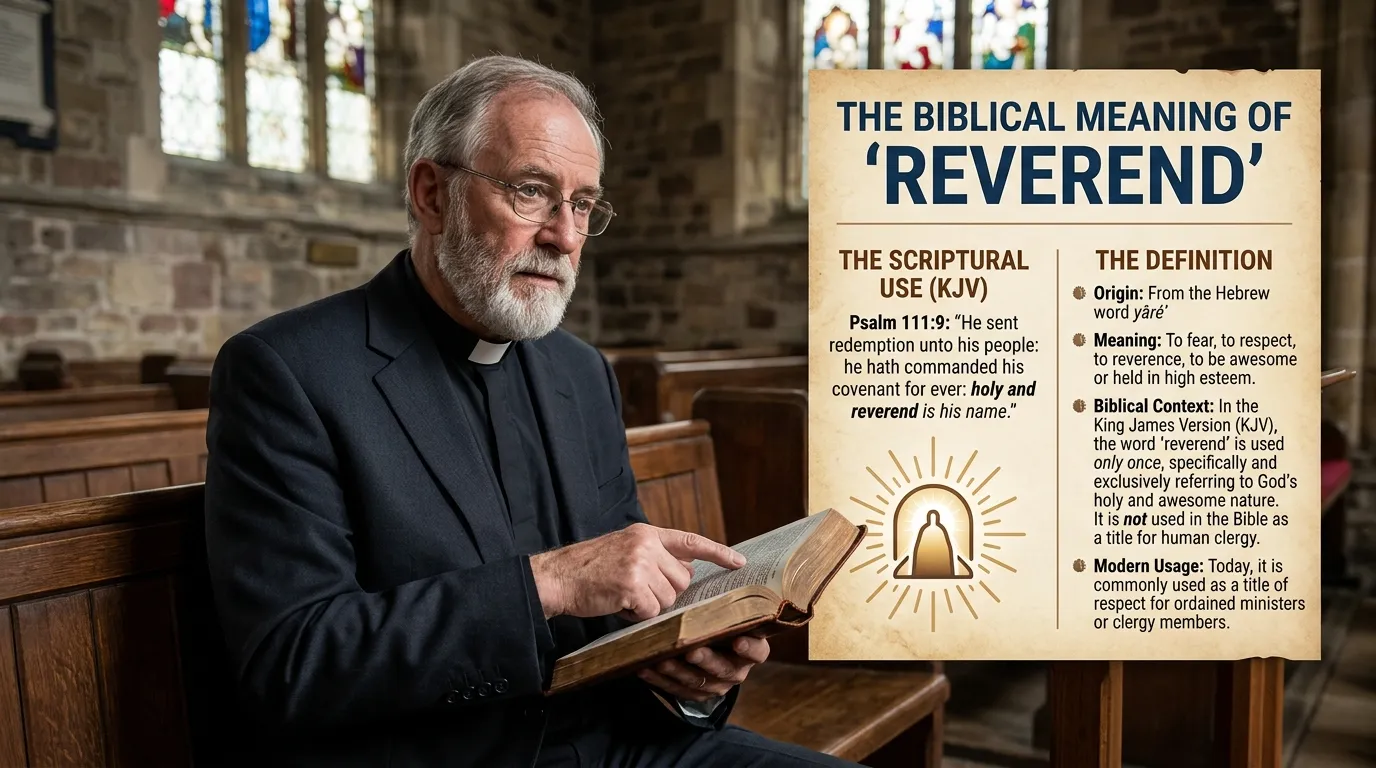
The word “reverend” belongs to God alone at least according to the Bible. The reverend meaning in the Bible traces back to a single verse in the King James Version: Psalm 111:9, which reads, “holy and reverend is His name,” referring directly and exclusively to God.
The word is translated from the Hebrew yare, which carries meanings like “awesome,” “awe-inspiring,” “terrifying,” and “fearful.” It conveys not ordinary respect but a deep, holy reverence reserved for the Divine.
Many people search for this term because they see “Reverend” printed before a pastor’s name every Sunday and wonder if that is biblical? It is a fair and important question. When we look into Scripture, the word refers only to God Himself, and not once is it applied to a man.
Most modern translations, including the NIV, NKJV, and ESV, render the Hebrew as “holy and awesome” rather than “reverend.” Understanding this distinction helps believers think more carefully about titles, worship, and where true reverence rightfully belongs.
What Does Reverend Mean in the Bible? (Featured Snippet Answer)
The reverend meaning in the Bible refers to someone or something that is worthy of deep respect, awe, and reverence. In the King James Version, the word “reverend” appears only once in Psalm 111:9 where it describes God’s holy name, not a religious leader. Biblically, the term emphasizes God’s holiness, majesty, and supreme authority rather than serving as an official title for people.
Does the Word “Reverend” Appear in the Bible?
Yes—but with an important distinction.
The English word “Reverend” appears only once in the King James Version (KJV) of the Bible.
Psalm 111:9 (KJV)
“He sent redemption unto his people: he hath commanded his covenant forever: holy and reverend is his name.“
This verse praises God for His faithfulness and redemption. The focus is not on human leadership but on God’s unique holiness and majesty.
Many modern Bible translations use words such as “awesome,” “holy,” “worthy of reverence,” or “to be feared” instead of “reverend.” Although the wording differs, the central message remains the same: God alone deserves ultimate reverence.
Hebrew Origin of the Word “Reverend”
The Original Hebrew Word
In Psalm 111:9, the English word “reverend” is translated from the Hebrew word יָרֵא (yare’), a word closely connected with fear, awe, reverence, and deep respect.
In biblical Hebrew, this kind of fear does not usually mean terror. Instead, it describes a profound awareness of God’s greatness that leads people to worship, obedience, and humility.
What Does “Yare'” Mean?
The Hebrew concept includes several related ideas:
- Deep respect for God’s holiness.
- Awe in His presence.
- Humble worship.
- Recognition of His authority.
- Loving obedience born from reverence.
Throughout the Old Testament, this reverent fear is presented as the foundation of genuine wisdom and faithful living.
Biblical Connection
The Bible repeatedly teaches that people who truly understand God’s greatness naturally respond with reverence rather than pride. This reverence transforms how they think, speak, and live.
Greek Connections in the New Testament
Although the specific English title “Reverend” is not used in the New Testament, similar ideas appear through several Greek words that describe reverence, holiness, and godly respect.
Reverence Toward God
The New Testament encourages believers to worship God with reverence and awe because He is holy and worthy of honor.
Respect for Spiritual Leaders
The apostles also instruct Christians to respect faithful leaders—not because they are spiritually superior, but because they faithfully serve God’s people with humility and integrity.
This distinction is important:
- God receives worship.
- Faithful leaders receive respect.
- Only God possesses perfect holiness.
Understanding this difference helps prevent confusion between honoring leaders and giving them the kind of reverence that belongs only to God.
Biblical Connections That Help Explain the Meaning of Reverend
Although “Reverend” appears only once, the Bible repeatedly teaches the principles behind the word.
God’s Holiness
Throughout Scripture, God’s holiness sets Him apart from all creation. His perfect character makes Him uniquely worthy of reverence.
The Fear of the Lord
The Bible often describes “the fear of the Lord” as the beginning of wisdom. This does not encourage panic or dread; instead, it calls believers to live with humble respect and obedience toward God.
Worship and Honor
Biblical worship is rooted in reverence. Genuine worship recognizes God’s greatness while acknowledging our dependence on Him.
These recurring themes help explain why Psalm 111:9 connects the word “reverend” directly to God’s name.
The Spiritual Meaning of Reverend in the Bible
### 1. Reverend Reminds Us That God Alone Is Truly Holy
One of the clearest spiritual lessons behind the biblical meaning of Reverend is that ultimate holiness belongs to God alone.
The Bible consistently describes God as completely pure, righteous, and unchanging. Unlike human beings, who are imperfect and dependent upon His grace, God’s character is flawless in every way.
Key Bible Verse
Psalm 111:9
“Holy and reverend is His name.”
This verse places the emphasis entirely on God rather than on human achievement or religious position.
Spiritual Lesson
When we recognize God’s holiness, we begin to see ourselves with greater humility. Instead of relying on our own strength, we learn to depend upon His wisdom, mercy, and guidance.
Modern application:
In today’s culture, people often seek recognition, influence, and status. The biblical meaning of Reverend redirects our attention away from human titles and toward the One who deserves everlasting honor.
2. Reverend Symbolizes Deep Respect and Reverence for God’s Presence
Reverence is much more than respectful behavior inside a church building.
It is an attitude of the heart.
People who truly revere God seek to honor Him in every area of life:
- Their words.
- Their decisions.
- Their relationships.
- Their work.
- Their worship.
Key Bible Verse
Proverbs 9:10
“The fear of the Lord is the beginning of wisdom.”
In simple terms, genuine wisdom begins when people recognize God’s greatness and allow that understanding to shape their lives.
What This Means Today
Living with reverence means asking questions such as:
- Does this decision honor God?
- Am I treating others with love and integrity?
- Are my priorities reflecting eternal values rather than temporary success?
3. Reverend Represents Humility Rather Than Personal Status
One of the greatest misunderstandings surrounding the word “Reverend” is that it represents personal importance or spiritual superiority. However, the Bible consistently teaches the opposite. True spiritual leadership is marked by humility, service, and obedience to God, not by titles or public recognition.
Throughout Scripture, faithful leaders were called to serve God’s people with compassion and integrity. Their authority came from God’s calling, not from a title.
Jesus Redefined Greatness
Jesus challenged the world’s view of leadership by teaching that greatness is found in serving others.
Key Bible Verse
Matthew 23:11–12
“The greatest among you shall be your servant. Whoever exalts himself will be humbled, and whoever humbles himself will be exalted.”
Simple Explanation
Jesus reminded His followers that spiritual maturity is measured by love, humility, and faithfulness—not by honorific titles or positions of influence.
Spiritual Meaning
The biblical meaning of Reverend encourages believers to:
- Serve rather than seek recognition.
- Lead with compassion instead of pride.
- Reflect God’s character through humility.
- Honor God above personal reputation.
Modern Example
Imagine two leaders. One constantly seeks praise and recognition, while the other quietly serves others with kindness and integrity. According to biblical principles, the second leader reflects God’s heart far more than the first.
4. Reverend Symbolizes Worship That Comes from the Heart
Biblical reverence is much deeper than outward religious practices. God desires hearts that genuinely love, trust, and honor Him.
Attending church, praying publicly, or using religious language has little value if the heart remains distant from God.
Key Bible Verse
John 4:23–24
“True worshipers will worship the Father in spirit and truth.”
Simple Explanation
Jesus taught that authentic worship is sincere. It flows from a relationship with God rather than empty traditions.
What This Means Spiritually
Living with reverence means:
- Trusting God during uncertainty.
- Obeying His Word.
- Living honestly.
- Showing compassion.
- Seeking His guidance every day.
Reverence transforms everyday life into an act of worship.
5. Reverend Reflects the Wisdom That Comes from Knowing God
The Bible repeatedly connects reverence with wisdom. Those who respect God’s authority develop greater discernment, patience, and understanding.
Key Bible Verse
Proverbs 1:7
“The fear of the Lord is the beginning of knowledge.”
Simple Explanation
True wisdom begins by recognizing that God knows more than we do.
When believers trust God’s guidance, they make decisions with greater peace and confidence.
Practical Application
Reverence helps people:
- Make wiser choices.
- Respond calmly during conflict.
- Develop patience.
- Grow spiritually.
- Build stronger relationships.
Rather than depending only on emotions or opinions, believers learn to seek God’s direction.
6. Reverend Points to God’s Eternal Authority
Everything in the world changes.
Cultures change.
Leaders change.
Circumstances change.
But God’s authority remains constant forever.
Key Bible Verse
Hebrews 13:8
“Jesus Christ is the same yesterday and today and forever.”
Simple Explanation
God’s character never changes. His promises remain trustworthy regardless of life’s circumstances.
Spiritual Lesson
The biblical meaning of Reverend reminds believers that their hope should rest in God’s unchanging nature rather than temporary success, popularity, or human approval.
Bible Verses That Reveal the Meaning of Reverend
Psalm 111:9
Holy and Reverend Is His Name
This verse teaches that God’s name alone deserves ultimate reverence because of His holiness, redemption, and everlasting covenant.
Proverbs 9:10
The Fear of the Lord Is the Beginning of Wisdom
Reverence opens the door to spiritual understanding and wise living.
Isaiah 6:3
God’s Holiness Fills Heaven
The angels continually proclaim:
“Holy, holy, holy is the Lord Almighty.”
Their worship demonstrates the awe and reverence due to God alone.
Ecclesiastes 12:13
Fear God and Keep His Commandments
The conclusion of life, according to Solomon, is simple:
Honor God and obey Him.
Hebrews 12:28–29
Worship with Reverence and Awe
Believers are encouraged to worship God with gratitude, humility, and reverence because He is holy and righteous.
Reverend Meaning in the Bible and Modern Life
The biblical message behind Reverend remains deeply relevant in today’s fast-paced world.
Finding Peace During Anxiety
Many people carry constant stress about work, finances, relationships, or the future.
Remembering God’s greatness reminds us that we do not have to control everything ourselves.
Reverence shifts our focus from fear to faith.
Practical Example
Instead of allowing anxious thoughts to dominate your mind, pause and pray. Acknowledge God’s wisdom and ask Him for guidance. This simple habit can bring peace even when circumstances remain uncertain.
Overcoming Identity Confusion
Modern society often encourages people to base their identity on careers, achievements, appearance, or social approval.
The Bible offers a different foundation.
Our value comes from being created and loved by God.
Living with reverence means finding security in His opinion rather than the constantly changing expectations of others.
Strengthening Relationships
Reverence influences how we treat people.
Those who honor God naturally seek to:
- Speak with kindness.
- Forgive quickly.
- Listen patiently.
- Serve selflessly.
- Build trust.
Healthy relationships grow when humility replaces pride.
Growing Through Life’s Challenges
Difficult seasons often become opportunities for spiritual growth.
People who approach hardships with reverence ask:
- What is God teaching me?
- How can I grow through this experience?
- How can I trust Him more deeply?
These questions transform challenges into opportunities for maturity.
Dreams About Reverend: Spiritual Meaning and Biblical Wisdom
Dreams have played meaningful roles throughout the Bible. God occasionally communicated through dreams to individuals such as Joseph, Daniel, and others.
However, Scripture also teaches believers to exercise wisdom and discernment.
Not every dream carries a divine message.
Possible Spiritual Meanings
Dreaming about a Reverend or spiritual leader may symbolize:
A Desire for Spiritual Guidance
Your heart may be seeking wisdom, encouragement, or direction.
A Call to Renew Your Faith
The dream may encourage you to spend more time in prayer, worship, or Bible study.
Respect for Spiritual Authority
It may reflect your appreciation for godly leadership or your desire to grow spiritually.
The overall meaning depends on the dream’s context, emotions, and circumstances.
Repeated Signs and Synchronicity
Some people repeatedly notice:
- Churches.
- Crosses.
- Pastors.
- The word “Reverend.”
- Sermons on similar themes.
These experiences often prompt reflection.
A Balanced Biblical Perspective
Repeated patterns can encourage self-examination and spiritual reflection, but they should not automatically be interpreted as supernatural messages from God.
Instead:
- Pray for wisdom.
- Compare impressions with Scripture.
- Seek wise counsel when necessary.
- Focus on God’s revealed truth rather than hidden signs.
The Bible remains the believer’s primary guide.
Scientific and Psychological Insights
Science helps explain why certain spiritual symbols become meaningful.
The Subconscious Mind
Our brains naturally pay greater attention to ideas that already hold emotional significance.
Once the concept of “Reverend” becomes personally meaningful, we may notice it more often in daily life.
Psychologists sometimes refer to this as selective attention.
Identity Formation
Healthy spiritual beliefs contribute to identity formation by helping people answer life’s biggest questions:
- Who am I?
- Why am I here?
- What truly matters?
A biblical understanding of reverence encourages purpose, humility, and resilience.
Emotional Symbolism
Words like “Reverend” often evoke feelings of:
- Respect.
- Safety.
- Guidance.
- Hope.
- Spiritual responsibility.
These emotional associations can motivate personal growth and positive life changes.
Practical Life Lessons from the Biblical Meaning of Reverend
Understanding biblical reverence becomes meaningful only when it shapes daily living.
Practice Daily Reflection
Spend a few quiet minutes each day asking how your actions reflected God’s character.
Develop a Habit of Gratitude
Thank God for His guidance, grace, and faithfulness rather than focusing only on life’s difficulties.
Pray with Reverence
Approach prayer with humility, honesty, and confidence, remembering that you are speaking to the holy Creator who loves you.
Grow in Emotional Awareness
Notice your reactions during stressful situations.
Be patient when challenges arise.
Stay humble in both success and failure.
Forgive others instead of holding grudges.
Honor Others Through Service
Reverence for God naturally leads to compassion toward people.
Simple acts of kindness reflect His love in practical ways.
A Balanced and Trustworthy Biblical Perspective
Understanding the reverend’s meaning in the Bible requires both faith and careful interpretation. While the word “Reverend” carries deep spiritual significance, it is important to avoid assumptions that go beyond what Scripture teaches.
The Bible clearly presents God alone as perfectly holy and ultimately worthy of reverence. At the same time, it encourages believers to respect faithful spiritual leaders because of their service—not because they possess divine authority.
In today’s world, it can be easy to place too much emphasis on titles, positions, or personalities. Scripture gently redirects our focus toward God’s character rather than human recognition.
Not Every Sign Is a Divine Message
Many people wonder whether repeatedly hearing the word “Reverend,” dreaming about pastors, or noticing similar spiritual patterns means God is speaking directly to them.
Sometimes these experiences may encourage deeper reflection.
Other times, they may simply reflect what your mind has been thinking about recently.
The healthiest biblical approach is to:
- Test every impression against Scripture.
- Pray for wisdom before drawing conclusions.
- Seek guidance from mature believers when needed.
- Keep your relationship with God rooted in His Word rather than unusual experiences.
God often speaks most clearly through the Bible, prayer, wise counsel, and the work of the Holy Spirit in a believer’s life.
Common Misunderstandings About the Word “Reverend”
Does the Bible Command Ministers to Use the Title Reverend?
No.
The Bible does not command pastors, elders, bishops, or ministers to use the title “Reverend.”
The title developed later in church history as a respectful way of addressing clergy.
Scripture focuses far more on a leader’s character than on a leader’s title.
Is It Wrong to Call Someone Reverend?
Christians hold different views.
Some churches use the title simply as a respectful form of address.
Others avoid it because Psalm 111:9 applies the word “reverend” specifically to God’s holy name in the King James Version.
The Bible does not directly forbid its modern use, but it consistently teaches that all honor ultimately belongs to God.
What Matters Most Biblically?
Whether someone uses the title or not, the greater biblical principle is this:
- Live with humility.
- Honor God above yourself.
- Serve others faithfully.
- Give glory to God rather than seeking personal recognition.
These principles remain far more important than any title.
Key Takeaways from the Reverend Meaning in the Bible
The biblical meaning of Reverend teaches timeless truths that every believer can apply.
Remember These Important Lessons
- God alone is perfectly holy and worthy of ultimate reverence.
- True wisdom begins with reverence for the Lord.
- Spiritual leadership is rooted in humility, not status.
- Respect for faithful leaders should never replace worship of God.
- A reverent heart produces wisdom, peace, compassion, and spiritual maturity.
- The Bible should remain the primary guide when interpreting dreams, signs, or personal experiences.
- Living with reverence transforms everyday decisions, relationships, and personal growth.
These truths continue to shape believers today just as they did throughout biblical history.
FAQs:
What does Reverend mean in the Bible?
In the Bible, Reverend refers to someone or something worthy of deep respect and awe. In Psalm 111:9 (KJV), the word describes God’s holy name, emphasizing His holiness, majesty, and authority.
Is Reverend a biblical title for pastors?
The Bible does not give ministers the official title “Reverend.” The title became common in church history, but Scripture places greater emphasis on humility, faithful service, and godly character than on honorific titles.
Why is God called Reverend in Psalm 111:9?
The verse highlights God’s holiness and greatness. It teaches that His name deserves reverence because He alone is perfect, eternal, and the source of redemption.
What is the spiritual meaning of Reverend?
Spiritually, Reverend represents:
- Reverence for God’s holiness.
- Humility before the Creator.
- Wisdom that comes from honoring God.
- Genuine worship.
- Faithful obedience.
- Respect rooted in love rather than fear.
Can dreaming about a Reverend have spiritual meaning?
Possibly. Such dreams may reflect a desire for guidance, spiritual growth, or renewed faith. However, not every dream is a divine message. Christians are encouraged to interpret dreams carefully, pray for wisdom, and compare every impression with biblical truth.
Final Thoughts:
The reverend meaning in the Bible is both simple and profound. It describes something that belongs exclusively to God His holy, awesome, awe-inspiring name. This verse makes one truth clear: God’s name is reverend, not man’s.
The title is widely used in churches today as a mark of honor for ordained ministers. In most churches and denominations, it is given to someone who has undergone formal ministry training and been examined by church leadership through ordination.
That tradition is understandable, but it is worth knowing it is rooted in historical church practice rather than direct biblical command.
If you are uncomfortable using the title “Reverend” for a church leader, biblical alternatives like “Pastor,” “Elder,” or “Evangelist” are all titles with direct scriptural support.
Ultimately, understanding what this word truly means in Scripture deepens your respect for God’s holiness. True reverence is not about a title on a church bulletin, it is about a heart that recognizes God’s greatness and responds with humility, worship, and faith. That kind of reverence never goes out of style.