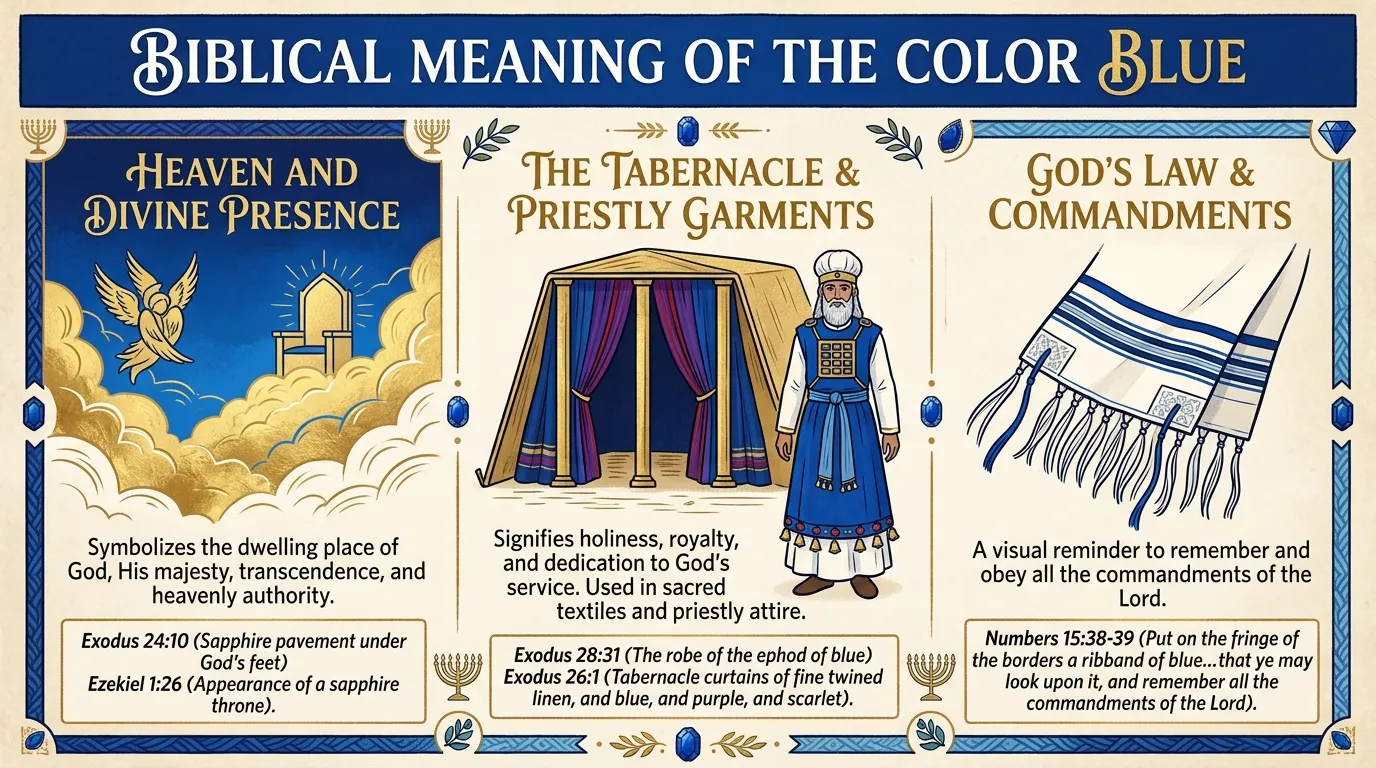
The color blue holds deep spiritual significance throughout Scripture, often overlooked yet rich with meaning. Understanding the blue meaning in the Bible opens a window into ancient symbolism connecting heaven holiness and divine authority.
From the blue threads woven into the priestly garments in Exodus to the heavenly visions described by prophets like Ezekiel, blue consistently represents God’s presence and the sacred boundary between earth and the divine realm.
Throughout biblical history, blue dye often derived from a rare and costly source was reserved for sacred objects royal garments and the Tabernacle’s curtains, signifying its association with holiness and authority.
This connection wasn’t accidental; ancient Israelites viewed blue as a visual reminder of God’s commandments and covenant.
Whether you’re studying biblical symbolism for personal growth, academic research, or spiritual curiosity, exploring the blue meaning in the Bible reveals fascinating layers of theological depth cultural context and timeless lessons about faithfulness, remembrance, and divine connection woven throughout Scripture.
What Does Blue Mean in the Bible?
Featured Snippet Answer
In the Bible, blue symbolizes heaven, God’s presence, divine truth, holiness, spiritual authority, and obedience to God’s commands. The color appears throughout the Old Testament in sacred garments, the Tabernacle, and religious objects, representing a connection between humanity and God.
Does the Color Blue Appear in the Bible?
Yes, blue appears many times throughout Scripture, especially in the Old Testament.
The Hebrew word most often associated with biblical blue is “tekhelet”, a special blue dye used in sacred garments and religious items. This color held deep spiritual significance because it reminded God’s people of heaven and His commandments.
Blue was prominently used in:
- The Tabernacle curtains
- The High Priest’s garments
- Sacred coverings
- Religious tassels worn by Israelites
- Temple decorations
Because of its repeated use in holy settings, blue became associated with God’s presence and spiritual devotion.
Hebrew Origin and Biblical Connection of Blue
The Meaning of Tekhelet
The Hebrew word tekhelet refers to a rich blue dye used in ancient Israel.
Historically, this color was considered valuable and sacred. It was often reserved for religious purposes rather than ordinary use.
The symbolism connected to tekhelet includes:
- Heaven
- Divine authority
- Holiness
- Spiritual awareness
- Covenant relationship with God
Why Blue Was Important in Biblical Worship
God specifically instructed His people to use blue in sacred objects and clothing.
The purpose was not merely decorative. Blue served as a visual reminder that believers were called to live with their hearts focused on God rather than worldly distractions.
Spiritual Meaning of Blue in the Bible
Blue Represents Heaven and God’s Presence
One of the strongest biblical meanings of blue is its connection to heaven.
The color naturally reminds people of the sky above, which throughout Scripture often symbolizes God’s majesty and authority.
In Exodus, blue appears extensively within the Tabernacle—the sacred place where God’s presence dwelled among His people.
Simple Spiritual Insight
Blue reminds believers to lift their eyes beyond temporary struggles and remember that God remains present even during difficult seasons.
Blue Symbolizes Divine Truth
The Bible consistently links God with truth.
Because blue was associated with heavenly realities, it became a symbol of spiritual truth and divine wisdom.
In a world filled with confusion and conflicting opinions, the symbolism of blue encourages believers to seek truth through faith, wisdom, and discernment.
Modern Application
Many people today struggle with misinformation, uncertainty, and identity confusion. The biblical symbolism of blue reminds us to pursue truth rather than simply following popular opinions.
Blue Reflects Holiness and Purity
Blue was used in sacred garments worn by priests who served before God.
This connection made blue a symbol of holiness, a life set apart for God’s purposes.
Holiness does not mean perfection. Instead, it reflects a sincere desire to align one’s thoughts, actions, and character with God’s values.
Practical Meaning
The symbolism of blue encourages:
- Integrity
- Honesty
- Moral clarity
- Spiritual growth
- Personal responsibility
Blue Represents Obedience to God’s Commands
One of the clearest biblical examples appears in Numbers 15:38-39, where Israelites were instructed to place blue tassels on their garments.
These tassels served as reminders to obey God’s commandments.
Spiritual Lesson
Blue symbolizes remembering what truly matters.
In modern life, it can remind believers to remain focused on their values even when distractions compete for their attention.
Blue Symbolizes Divine Protection and Guidance
Throughout Scripture, God’s guidance is often associated with His presence among His people.
Because blue represented heaven and God’s authority, it became linked to divine protection and spiritual direction.
For many believers, the color blue serves as a reminder that they are not navigating life’s challenges alone.
Blue Meaning in the Bible and Modern Life
Blue and Anxiety
Anxiety often causes people to feel overwhelmed by uncertainty.
The biblical symbolism of blue offers a different perspective.
Because blue represents heaven and God’s presence, it encourages believers to shift their focus from fear toward faith.
This does not eliminate challenges, but it can help create a sense of peace during stressful situations.
Blue and Identity Confusion
Many people wrestle with questions such as:
- Who am I?
- What is my purpose?
- Why do I feel lost?
The symbolism of blue reminds believers that identity is rooted not in social approval but in their relationship with God.
Understanding this truth can provide stability during seasons of uncertainty.
Blue and Relationships
Healthy relationships require:
- Trust
- Honesty
- Communication
- Compassion
Because blue symbolizes truth and faithfulness, it offers valuable lessons for building stronger personal relationships.
Relationships flourish when people choose authenticity over appearances.
Blue and Personal Growth
Personal growth often requires:
- Self-awareness
- Reflection
- Courage
- Patience
The biblical meaning of blue encourages people to pursue growth while remaining connected to spiritual values and deeper purpose.
Seeing Blue in Dreams and Repeated Signs
Spiritual Interpretation of Blue in Dreams
Many people report seeing blue repeatedly in dreams, visions, artwork, clothing, or daily life.
Spiritually, blue may symbolize:
- Peace
- Divine guidance
- Spiritual awakening
- Heavenly perspective
- Inner healing
For some believers, recurring blue imagery serves as a reminder to focus on faith and trust rather than fear.
Psychological Interpretation of Blue
Psychology provides another perspective.
The human brain naturally notices symbols that carry emotional significance.
If blue feels meaningful to you, repeated encounters may reflect:
- Emotional needs
- Inner desires for peace
- Spiritual reflection
- Subconscious processing
This balanced perspective allows room for both spiritual meaning and psychological understanding.
Scientific Insights Behind the Symbolism of Blue
Blue and Emotional Responses
Researchers have long observed that colors influence emotions.
Blue is frequently associated with:
- Calmness
- Stability
- Trust
- Safety
- Reflection
These emotional responses may help explain why blue has maintained strong spiritual associations throughout history.
The Subconscious Mind and Symbolism
The subconscious mind often communicates through symbols rather than direct language.
When blue appears in dreams or captures attention repeatedly, it may represent:
- A need for peace
- Desire for clarity
- Spiritual reflection
- Emotional healing
- Personal transformation
The meaning often depends on an individual’s experiences and emotional state.
Identity Formation and Symbolic Meaning
Psychologists recognize that symbols can influence personal identity.
Colors associated with positive values often become meaningful markers that help individuals connect with purpose, beliefs, and emotional well-being.
Practical Life Lessons from the Biblical Meaning of Blue
Practice Daily Reflection
Spend a few minutes each day asking:
- What am I focusing on?
- What truly matters most?
- Am I living according to my values?
Reflection creates greater clarity and self-awareness.
Develop Gratitude
Gratitude helps shift attention away from fear and negativity.
Simple habits include:
- Writing three daily blessings
- Appreciating small victories
- Recognizing personal growth
Strengthen Prayer and Spiritual Connection
Prayer creates space for guidance, peace, and spiritual renewal.
Even a few minutes of sincere prayer each day can strengthen emotional resilience.
Build Emotional Awareness
Pay attention to your emotions rather than ignoring them.
Ask yourself:
- What am I feeling?
- Why am I feeling it?
- What healthy response can I choose?
Emotional awareness promotes healthier relationships and better decision-making.
Focus on Truth Over Fear
The symbolism of blue encourages believers to seek truth rather than being controlled by anxiety or uncertainty.
This habit can strengthen confidence and spiritual maturity.
A Balanced Perspective on Biblical Color Symbolism
It is important to approach biblical symbolism with wisdom and balance.
The color blue is not:
- A magical sign
- A guaranteed message from God
- A predictor of future events
However, it can serve as a meaningful symbol that inspires reflection, faith, and personal growth.
Healthy spirituality combines biblical understanding, wisdom, and practical application rather than relying solely on signs and symbols.
FAQs:
What does blue symbolize in the Bible?
Blue symbolizes heaven, divine truth, holiness, obedience, spiritual authority, and God’s presence.
Why was blue important in the Old Testament?
Blue was used in sacred garments, Tabernacle furnishings, and religious objects as a reminder of God’s holiness and commandments.
What is the Hebrew word for biblical blue?
The primary Hebrew term is tekhelet, a special blue dye associated with sacred purposes.
What does dreaming about the color blue mean spiritually?
Spiritually, blue in dreams may symbolize peace, divine guidance, healing, faith, and spiritual awareness.
Is seeing blue repeatedly a sign from God?
Not necessarily. While some people view repeated blue imagery as spiritually meaningful, psychological factors such as attention and emotional significance may also play a role.
Final Thoughts:
The blue meaning in the Bible goes far beyond a simple color. It points toward heaven, truth, holiness, guidance, and God’s enduring presence.
In a world filled with anxiety, distractions, and uncertainty, the symbolism of blue offers a powerful reminder to lift your eyes toward what is eternal rather than becoming trapped by temporary struggles.
Whether blue appears in Scripture, dreams, personal reflection, or everyday life, its biblical symbolism encourages a deeper connection with faith, purpose, and spiritual growth.
Most importantly, blue reminds us that peace is possible, truth matters, and our lives can be guided by something greater than fear.
No matter what season you are facing today, remember this: your story is still unfolding, your purpose still matters, and hope remains within reach.